
Why Are Steep Hills Difficult to Mow?
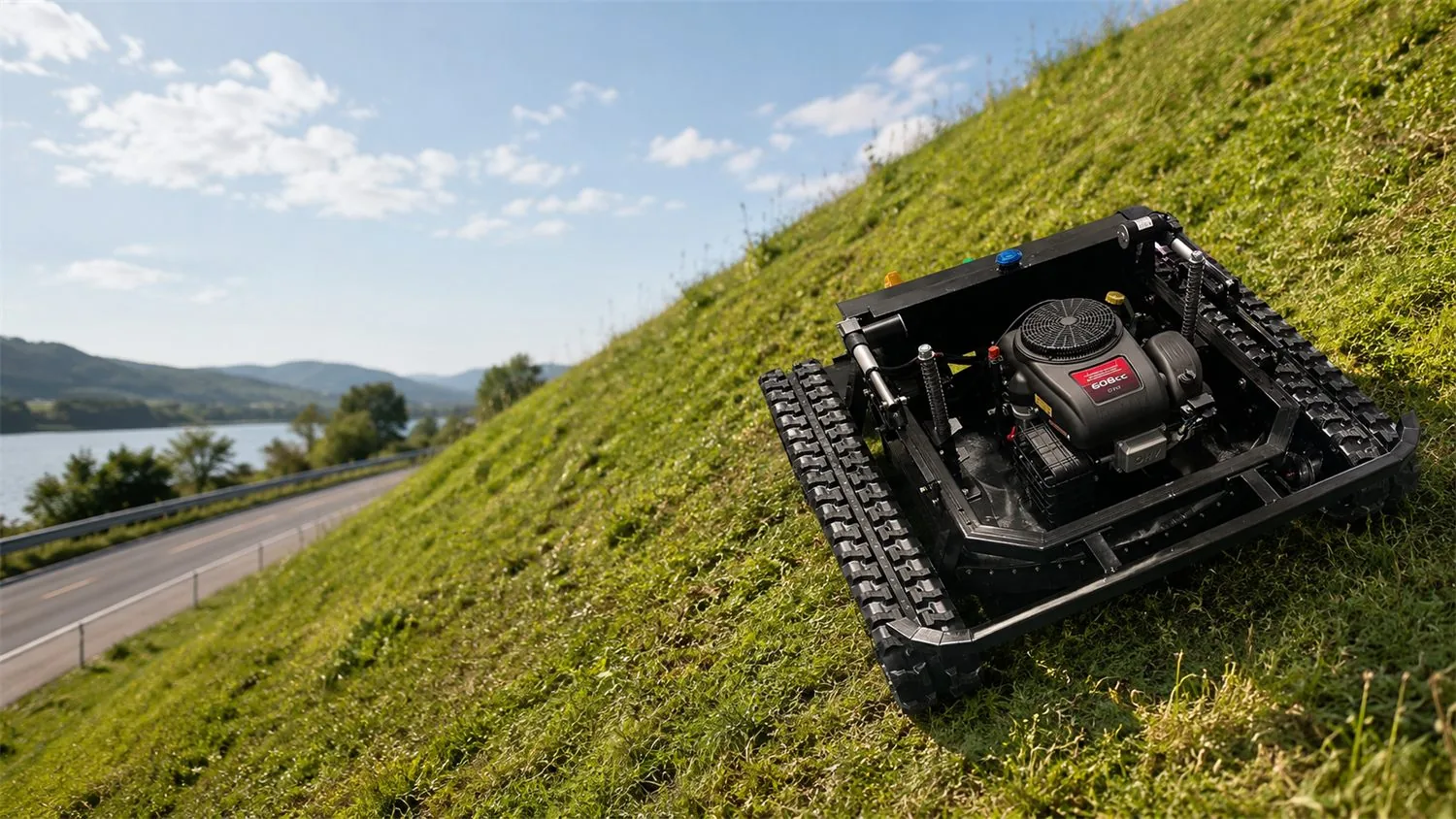
For steep hills, start by asking what the mower must handle: the slope angle, wet or loose ground, tall grass, weeds, brush, hidden stones, operator visibility and access width. For steeper, rougher or more uneven ground, a tracked remote control mower can often provide better traction while keeping the operator away from the machine, but the final selection still depends on the real site. Steep hills are difficult because the machine is not only cutting grass. It must keep traction, stay stable and move across ground that can change every few meters.
- Why steep hills are difficult
- Mower type comparison
- Why tracked remote mowers help
- How steep is too steep
- Flail vs rotary
- How to choose
- Before choosing checklist
- Remote mower configurations
What Type of Mower Is Best for Steep Hills?
For steep hills, start by asking what the mower must handle: the slope angle, wet or loose ground, tall grass, weeds, brush, hidden stones, operator visibility and access width. For steeper, rougher or more uneven ground, a tracked remote control mower can often provide better traction while keeping the operator away from the machine, but the final selection still depends on the real site. Steep hills are difficult because the machine is not only cutting grass. It must keep traction, stay stable and move across ground that can change every few meters.
- Why steep hills are difficult
- Mower type comparison
- Why tracked remote mowers help
- How steep is too steep
- Flail vs rotary
- How to choose
- Before choosing checklist
- Remote mower configurations
Why Tracked Remote Mowers Work Well on Slopes
For steep hills, start by asking what the mower must handle: the slope angle, wet or loose ground, tall grass, weeds, brush, hidden stones, operator visibility and access width. For steeper, rougher or more uneven ground, a tracked remote control mower can often provide better traction while keeping the operator away from the machine, but the final selection still depends on the real site. Steep hills are difficult because the machine is not only cutting grass. It must keep traction, stay stable and move across ground that can change every few meters.
- Why steep hills are difficult
- Mower type comparison
- Why tracked remote mowers help
- How steep is too steep
- Flail vs rotary
- How to choose
- Before choosing checklist
- Remote mower configurations
Better Traction
For steep hills, start by asking what the mower must handle: the slope angle, wet or loose ground, tall grass, weeds, brush, hidden stones, operator visibility and access width. For steeper, rougher or more uneven ground, a tracked remote control mower can often provide better traction while keeping the operator away from the machine, but the final selection still depends on the real site. Steep hills are difficult because the machine is not only cutting grass. It must keep traction, stay stable and move across ground that can change every few meters.
- Why steep hills are difficult
- Mower type comparison
- Why tracked remote mowers help
- How steep is too steep
- Flail vs rotary
- How to choose
- Before choosing checklist
- Remote mower configurations
Lower and More Stable Design
For steep hills, start by asking what the mower must handle: the slope angle, wet or loose ground, tall grass, weeds, brush, hidden stones, operator visibility and access width. For steeper, rougher or more uneven ground, a tracked remote control mower can often provide better traction while keeping the operator away from the machine, but the final selection still depends on the real site. Steep hills are difficult because the machine is not only cutting grass. It must keep traction, stay stable and move across ground that can change every few meters.
- Why steep hills are difficult
- Mower type comparison
- Why tracked remote mowers help
- How steep is too steep
- Flail vs rotary
- How to choose
- Before choosing checklist
- Remote mower configurations
Remote Operation
For steep hills, start by asking what the mower must handle: the slope angle, wet or loose ground, tall grass, weeds, brush, hidden stones, operator visibility and access width. For steeper, rougher or more uneven ground, a tracked remote control mower can often provide better traction while keeping the operator away from the machine, but the final selection still depends on the real site. Steep hills are difficult because the machine is not only cutting grass. It must keep traction, stay stable and move across ground that can change every few meters.
- Why steep hills are difficult
- Mower type comparison
- Why tracked remote mowers help
- How steep is too steep
- Flail vs rotary
- How to choose
- Before choosing checklist
- Remote mower configurations
Better Performance on Uneven Ground
For steep hills, start by asking what the mower must handle: the slope angle, wet or loose ground, tall grass, weeds, brush, hidden stones, operator visibility and access width. For steeper, rougher or more uneven ground, a tracked remote control mower can often provide better traction while keeping the operator away from the machine, but the final selection still depends on the real site. Steep hills are difficult because the machine is not only cutting grass. It must keep traction, stay stable and move across ground that can change every few meters.
- Why steep hills are difficult
- Mower type comparison
- Why tracked remote mowers help
- How steep is too steep
- Flail vs rotary
- How to choose
- Before choosing checklist
- Remote mower configurations
How Steep Is Too Steep for a Lawn Mower?
For steep hills, start by asking what the mower must handle: the slope angle, wet or loose ground, tall grass, weeds, brush, hidden stones, operator visibility and access width. For steeper, rougher or more uneven ground, a tracked remote control mower can often provide better traction while keeping the operator away from the machine, but the final selection still depends on the real site. Steep hills are difficult because the machine is not only cutting grass. It must keep traction, stay stable and move across ground that can change every few meters.
- Why steep hills are difficult
- Mower type comparison
- Why tracked remote mowers help
- How steep is too steep
- Flail vs rotary
- How to choose
- Before choosing checklist
- Remote mower configurations
Flail Mower vs Rotary Mower for Steep Slopes
For steep hills, start by asking what the mower must handle: the slope angle, wet or loose ground, tall grass, weeds, brush, hidden stones, operator visibility and access width. For steeper, rougher or more uneven ground, a tracked remote control mower can often provide better traction while keeping the operator away from the machine, but the final selection still depends on the real site. Steep hills are difficult because the machine is not only cutting grass. It must keep traction, stay stable and move across ground that can change every few meters.
- Why steep hills are difficult
- Mower type comparison
- Why tracked remote mowers help
- How steep is too steep
- Flail vs rotary
- How to choose
- Before choosing checklist
- Remote mower configurations
How to Choose the Right Mower for Your Hill
For steep hills, start by asking what the mower must handle: the slope angle, wet or loose ground, tall grass, weeds, brush, hidden stones, operator visibility and access width. For steeper, rougher or more uneven ground, a tracked remote control mower can often provide better traction while keeping the operator away from the machine, but the final selection still depends on the real site. Steep hills are difficult because the machine is not only cutting grass. It must keep traction, stay stable and move across ground that can change every few meters.
- Why steep hills are difficult
- Mower type comparison
- Why tracked remote mowers help
- How steep is too steep
- Flail vs rotary
- How to choose
- Before choosing checklist
- Remote mower configurations
1. Measure the Slope
For steep hills, start by asking what the mower must handle: the slope angle, wet or loose ground, tall grass, weeds, brush, hidden stones, operator visibility and access width. For steeper, rougher or more uneven ground, a tracked remote control mower can often provide better traction while keeping the operator away from the machine, but the final selection still depends on the real site. Steep hills are difficult because the machine is not only cutting grass. It must keep traction, stay stable and move across ground that can change every few meters.
- Why steep hills are difficult
- Mower type comparison
- Why tracked remote mowers help
- How steep is too steep
- Flail vs rotary
- How to choose
- Before choosing checklist
- Remote mower configurations
2. Check the Ground Conditions
For steep hills, start by asking what the mower must handle: the slope angle, wet or loose ground, tall grass, weeds, brush, hidden stones, operator visibility and access width. For steeper, rougher or more uneven ground, a tracked remote control mower can often provide better traction while keeping the operator away from the machine, but the final selection still depends on the real site. Steep hills are difficult because the machine is not only cutting grass. It must keep traction, stay stable and move across ground that can change every few meters.
- Why steep hills are difficult
- Mower type comparison
- Why tracked remote mowers help
- How steep is too steep
- Flail vs rotary
- How to choose
- Before choosing checklist
- Remote mower configurations
3. Identify the Vegetation
For steep hills, start by asking what the mower must handle: the slope angle, wet or loose ground, tall grass, weeds, brush, hidden stones, operator visibility and access width. For steeper, rougher or more uneven ground, a tracked remote control mower can often provide better traction while keeping the operator away from the machine, but the final selection still depends on the real site. Steep hills are difficult because the machine is not only cutting grass. It must keep traction, stay stable and move across ground that can change every few meters.
- Why steep hills are difficult
- Mower type comparison
- Why tracked remote mowers help
- How steep is too steep
- Flail vs rotary
- How to choose
- Before choosing checklist
- Remote mower configurations
4. Choose the Right Cutting Width
For steep hills, start by asking what the mower must handle: the slope angle, wet or loose ground, tall grass, weeds, brush, hidden stones, operator visibility and access width. For steeper, rougher or more uneven ground, a tracked remote control mower can often provide better traction while keeping the operator away from the machine, but the final selection still depends on the real site. Steep hills are difficult because the machine is not only cutting grass. It must keep traction, stay stable and move across ground that can change every few meters.
- Why steep hills are difficult
- Mower type comparison
- Why tracked remote mowers help
- How steep is too steep
- Flail vs rotary
- How to choose
- Before choosing checklist
- Remote mower configurations
5. Consider Remote Control
For steep hills, start by asking what the mower must handle: the slope angle, wet or loose ground, tall grass, weeds, brush, hidden stones, operator visibility and access width. For steeper, rougher or more uneven ground, a tracked remote control mower can often provide better traction while keeping the operator away from the machine, but the final selection still depends on the real site. Steep hills are difficult because the machine is not only cutting grass. It must keep traction, stay stable and move across ground that can change every few meters.
- Why steep hills are difficult
- Mower type comparison
- Why tracked remote mowers help
- How steep is too steep
- Flail vs rotary
- How to choose
- Before choosing checklist
- Remote mower configurations
6. Check Engine and Compliance Requirements
For steep hills, start by asking what the mower must handle: the slope angle, wet or loose ground, tall grass, weeds, brush, hidden stones, operator visibility and access width. For steeper, rougher or more uneven ground, a tracked remote control mower can often provide better traction while keeping the operator away from the machine, but the final selection still depends on the real site. Steep hills are difficult because the machine is not only cutting grass. It must keep traction, stay stable and move across ground that can change every few meters.
- Why steep hills are difficult
- Mower type comparison
- Why tracked remote mowers help
- How steep is too steep
- Flail vs rotary
- How to choose
- Before choosing checklist
- Remote mower configurations
Common buyer questions
What is the best mower for steep hills?
The best mower for steep hills depends on the slope angle, surface, vegetation and operator position. For small maintained lawns, a push mower or suitable riding mower may work. For rougher slopes, orchards, embankments and tall vegetation, a tracked remote mower is often worth comparing because it can improve traction and keep the operator away from the machine.
Are tracked mowers better for slopes?
Tracked mowers can work well on slopes because the crawler tracks provide a larger ground contact area and can improve grip on uneven or soft surfaces. They are not automatically suitable for every hill. Wet grass, loose soil, side-slope travel, attachments and recovery access still need to be checked before selecting or operating the mower.
Can a remote control mower cut steep slopes?
A remote control mower can be used on many difficult mowing sites, including slopes and rough terrain, when the selected model and site conditions match. The real answer depends on measured gradient, ground condition, vegetation, visibility, machine configuration and operating method. The operator should follow the machine documentation and local safety requirements.
What mower is best for tall grass on hills?
For tall grass, weeds and mixed vegetation on hills, a flail mower configuration is often more suitable than a mower intended for short, regularly maintained lawn grass. The final choice depends on vegetation height, density, stem type, slope condition and whether hidden stones, wire or debris are present.
What should I check before buying a slope mower?
Check the actual slope angle, travel direction, soil, moisture, stones, holes, vegetation type, access width, cutting width, remote control range, emergency stop, engine preference and destination-market document needs. Clear site photos and short videos can help the supplier recommend a better configuration.