
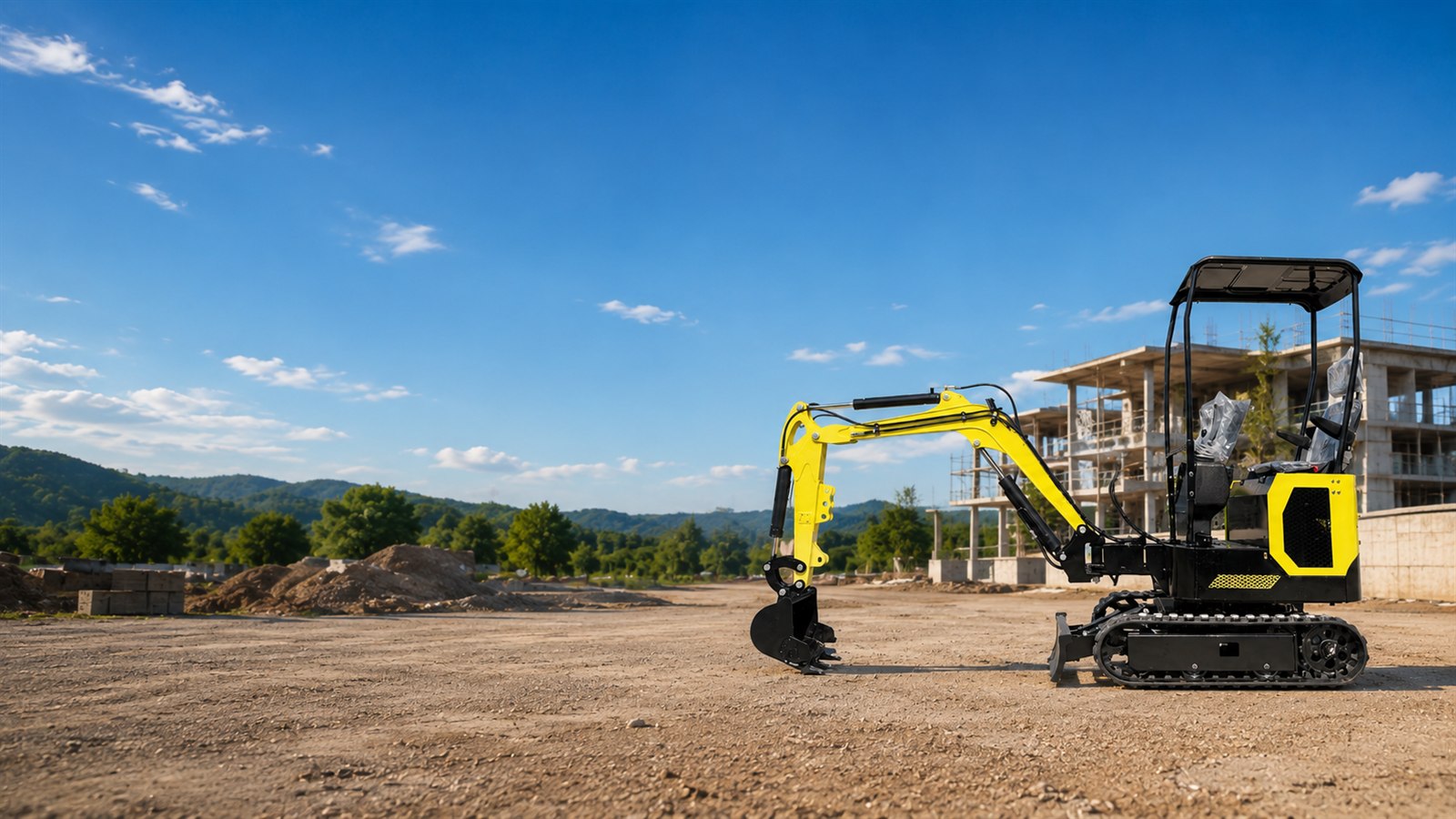
Do not choose only by tonnage
Many buyers start by asking for a 1 ton, 1.5 ton or 2 ton mini excavator. That is normal, but the tonnage alone does not tell the full story. A machine that works well in a garden may not be the right one for trenching on a farm. A stronger model may also be too wide for a small gate. A better first question is simple: what job do you want the machine to do? Dig small drainage trenches, prepare landscaping beds, clean ditches, work around houses, or use an auger or breaker? Once we know the job, it is much easier to check the machine direction.
- What job you want to do: trenching, landscaping, farm work, garden work or small construction.
- The narrowest entrance width, gate width or trailer loading condition.
- Ground condition: lawn, mud, compacted soil, gravel, slope or mixed terrain.
- Attachments you may need: bucket, auger, breaker, ripper, thumb clamp or quick coupler.
- Your country or nearest port.
- Whether this is for personal use, contractor work, rental or dealer stock.
Measure the entrance before comparing models
Many buyers start by asking for a 1 ton, 1.5 ton or 2 ton mini excavator. That is normal, but the tonnage alone does not tell the full story. A machine that works well in a garden may not be the right one for trenching on a farm. A stronger model may also be too wide for a small gate. A better first question is simple: what job do you want the machine to do? Dig small drainage trenches, prepare landscaping beds, clean ditches, work around houses, or use an auger or breaker? Once we know the job, it is much easier to check the machine direction.
- What job you want to do: trenching, landscaping, farm work, garden work or small construction.
- The narrowest entrance width, gate width or trailer loading condition.
- Ground condition: lawn, mud, compacted soil, gravel, slope or mixed terrain.
- Attachments you may need: bucket, auger, breaker, ripper, thumb clamp or quick coupler.
- Your country or nearest port.
- Whether this is for personal use, contractor work, rental or dealer stock.
Tell us about the ground
Many buyers start by asking for a 1 ton, 1.5 ton or 2 ton mini excavator. That is normal, but the tonnage alone does not tell the full story. A machine that works well in a garden may not be the right one for trenching on a farm. A stronger model may also be too wide for a small gate. A better first question is simple: what job do you want the machine to do? Dig small drainage trenches, prepare landscaping beds, clean ditches, work around houses, or use an auger or breaker? Once we know the job, it is much easier to check the machine direction.
- What job you want to do: trenching, landscaping, farm work, garden work or small construction.
- The narrowest entrance width, gate width or trailer loading condition.
- Ground condition: lawn, mud, compacted soil, gravel, slope or mixed terrain.
- Attachments you may need: bucket, auger, breaker, ripper, thumb clamp or quick coupler.
- Your country or nearest port.
- Whether this is for personal use, contractor work, rental or dealer stock.
Think about attachments early
Many buyers start by asking for a 1 ton, 1.5 ton or 2 ton mini excavator. That is normal, but the tonnage alone does not tell the full story. A machine that works well in a garden may not be the right one for trenching on a farm. A stronger model may also be too wide for a small gate. A better first question is simple: what job do you want the machine to do? Dig small drainage trenches, prepare landscaping beds, clean ditches, work around houses, or use an auger or breaker? Once we know the job, it is much easier to check the machine direction.
- What job you want to do: trenching, landscaping, farm work, garden work or small construction.
- The narrowest entrance width, gate width or trailer loading condition.
- Ground condition: lawn, mud, compacted soil, gravel, slope or mixed terrain.
- Attachments you may need: bucket, auger, breaker, ripper, thumb clamp or quick coupler.
- Your country or nearest port.
- Whether this is for personal use, contractor work, rental or dealer stock.
A common mistake: asking only for the lowest price
Many buyers start by asking for a 1 ton, 1.5 ton or 2 ton mini excavator. That is normal, but the tonnage alone does not tell the full story. A machine that works well in a garden may not be the right one for trenching on a farm. A stronger model may also be too wide for a small gate. A better first question is simple: what job do you want the machine to do? Dig small drainage trenches, prepare landscaping beds, clean ditches, work around houses, or use an auger or breaker? Once we know the job, it is much easier to check the machine direction.
- What job you want to do: trenching, landscaping, farm work, garden work or small construction.
- The narrowest entrance width, gate width or trailer loading condition.
- Ground condition: lawn, mud, compacted soil, gravel, slope or mixed terrain.
- Attachments you may need: bucket, auger, breaker, ripper, thumb clamp or quick coupler.
- Your country or nearest port.
- Whether this is for personal use, contractor work, rental or dealer stock.
Mini excavator FAQ
Is a smaller mini excavator always better for home or garden work? No. Smaller is easier to move through narrow places, but the digging job, soil and attachments still matter. Should I choose a model before choosing attachments? Not really. It is better to discuss the machine and attachments together.
Need help choosing a model?
Send VantMech your working area photos, entrance width and job details. We can help check which mini excavator direction makes sense before quoting.