
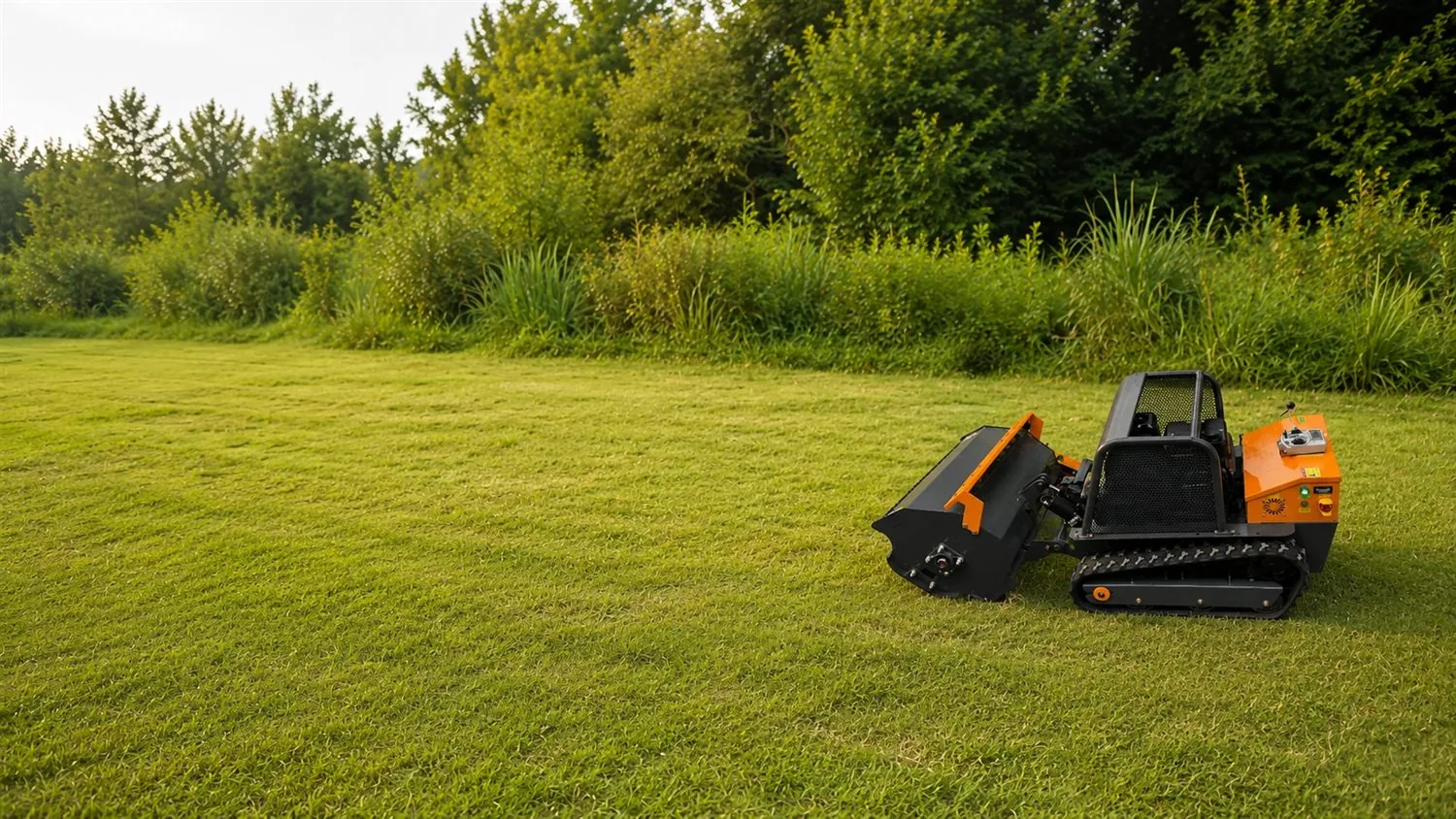
1. Measure slope; do not estimate it from a photo
Use the assessment as a conversation record between the site owner, operator and equipment supplier. It helps screen access and configuration questions, but it does not replace the site owner’s risk assessment, the machine manual, local rules or competent supervision. Stop and reassess whenever weather, ground condition, visibility or vegetation changes. Record the maximum and typical working gradients with a suitable measuring tool. Note whether the machine will work across the slope, up and down it, or around terraces. Wet grass, loose stone, holes and side loads can change traction and stability.
- Measure the terrain
- Describe vegetation
- Check application clearances
- Operating and recovery controls
- Initial model screening
- Common assessment mistakes
- Site assessment FAQ
- Measure the lowest module edge and the narrowest post spacing.
2. Describe the vegetation load
Use the assessment as a conversation record between the site owner, operator and equipment supplier. It helps screen access and configuration questions, but it does not replace the site owner’s risk assessment, the machine manual, local rules or competent supervision. Stop and reassess whenever weather, ground condition, visibility or vegetation changes. Record the maximum and typical working gradients with a suitable measuring tool. Note whether the machine will work across the slope, up and down it, or around terraces. Wet grass, loose stone, holes and side loads can change traction and stability.
- Measure the terrain
- Describe vegetation
- Check application clearances
- Operating and recovery controls
- Initial model screening
- Common assessment mistakes
- Site assessment FAQ
- Measure the lowest module edge and the narrowest post spacing.
3. Add application-specific clearance checks
Use the assessment as a conversation record between the site owner, operator and equipment supplier. It helps screen access and configuration questions, but it does not replace the site owner’s risk assessment, the machine manual, local rules or competent supervision. Stop and reassess whenever weather, ground condition, visibility or vegetation changes. Record the maximum and typical working gradients with a suitable measuring tool. Note whether the machine will work across the slope, up and down it, or around terraces. Wet grass, loose stone, holes and side loads can change traction and stability.
- Measure the terrain
- Describe vegetation
- Check application clearances
- Operating and recovery controls
- Initial model screening
- Common assessment mistakes
- Site assessment FAQ
- Measure the lowest module edge and the narrowest post spacing.
Solar arrays
Use the assessment as a conversation record between the site owner, operator and equipment supplier. It helps screen access and configuration questions, but it does not replace the site owner’s risk assessment, the machine manual, local rules or competent supervision. Stop and reassess whenever weather, ground condition, visibility or vegetation changes. Record the maximum and typical working gradients with a suitable measuring tool. Note whether the machine will work across the slope, up and down it, or around terraces. Wet grass, loose stone, holes and side loads can change traction and stability.
- Measure the terrain
- Describe vegetation
- Check application clearances
- Operating and recovery controls
- Initial model screening
- Common assessment mistakes
- Site assessment FAQ
- Measure the lowest module edge and the narrowest post spacing.
Orchards and vineyards
Use the assessment as a conversation record between the site owner, operator and equipment supplier. It helps screen access and configuration questions, but it does not replace the site owner’s risk assessment, the machine manual, local rules or competent supervision. Stop and reassess whenever weather, ground condition, visibility or vegetation changes. Record the maximum and typical working gradients with a suitable measuring tool. Note whether the machine will work across the slope, up and down it, or around terraces. Wet grass, loose stone, holes and side loads can change traction and stability.
- Measure the terrain
- Describe vegetation
- Check application clearances
- Operating and recovery controls
- Initial model screening
- Common assessment mistakes
- Site assessment FAQ
- Measure the lowest module edge and the narrowest post spacing.
Roadside and embankment slopes
Use the assessment as a conversation record between the site owner, operator and equipment supplier. It helps screen access and configuration questions, but it does not replace the site owner’s risk assessment, the machine manual, local rules or competent supervision. Stop and reassess whenever weather, ground condition, visibility or vegetation changes. Record the maximum and typical working gradients with a suitable measuring tool. Note whether the machine will work across the slope, up and down it, or around terraces. Wet grass, loose stone, holes and side loads can change traction and stability.
- Measure the terrain
- Describe vegetation
- Check application clearances
- Operating and recovery controls
- Initial model screening
- Common assessment mistakes
- Site assessment FAQ
- Measure the lowest module edge and the narrowest post spacing.
4. Record operating and recovery controls
Use the assessment as a conversation record between the site owner, operator and equipment supplier. It helps screen access and configuration questions, but it does not replace the site owner’s risk assessment, the machine manual, local rules or competent supervision. Stop and reassess whenever weather, ground condition, visibility or vegetation changes. Record the maximum and typical working gradients with a suitable measuring tool. Note whether the machine will work across the slope, up and down it, or around terraces. Wet grass, loose stone, holes and side loads can change traction and stability.
- Measure the terrain
- Describe vegetation
- Check application clearances
- Operating and recovery controls
- Initial model screening
- Common assessment mistakes
- Site assessment FAQ
- Measure the lowest module edge and the narrowest post spacing.
Plan recovery before the machine enters the work zone
Use the assessment as a conversation record between the site owner, operator and equipment supplier. It helps screen access and configuration questions, but it does not replace the site owner’s risk assessment, the machine manual, local rules or competent supervision. Stop and reassess whenever weather, ground condition, visibility or vegetation changes. Record the maximum and typical working gradients with a suitable measuring tool. Note whether the machine will work across the slope, up and down it, or around terraces. Wet grass, loose stone, holes and side loads can change traction and stability.
- Measure the terrain
- Describe vegetation
- Check application clearances
- Operating and recovery controls
- Initial model screening
- Common assessment mistakes
- Site assessment FAQ
- Measure the lowest module edge and the narrowest post spacing.
VantMech model fields for initial comparison
Use the assessment as a conversation record between the site owner, operator and equipment supplier. It helps screen access and configuration questions, but it does not replace the site owner’s risk assessment, the machine manual, local rules or competent supervision. Stop and reassess whenever weather, ground condition, visibility or vegetation changes. Record the maximum and typical working gradients with a suitable measuring tool. Note whether the machine will work across the slope, up and down it, or around terraces. Wet grass, loose stone, holes and side loads can change traction and stability.
- Measure the terrain
- Describe vegetation
- Check application clearances
- Operating and recovery controls
- Initial model screening
- Common assessment mistakes
- Site assessment FAQ
- Measure the lowest module edge and the narrowest post spacing.
Photo record to collect
Use the assessment as a conversation record between the site owner, operator and equipment supplier. It helps screen access and configuration questions, but it does not replace the site owner’s risk assessment, the machine manual, local rules or competent supervision. Stop and reassess whenever weather, ground condition, visibility or vegetation changes. Record the maximum and typical working gradients with a suitable measuring tool. Note whether the machine will work across the slope, up and down it, or around terraces. Wet grass, loose stone, holes and side loads can change traction and stability.
- Measure the terrain
- Describe vegetation
- Check application clearances
- Operating and recovery controls
- Initial model screening
- Common assessment mistakes
- Site assessment FAQ
- Measure the lowest module edge and the narrowest post spacing.
Send measurements, not just a slope photo
For an initial review, provide the site type, measured gradients, vegetation photos, narrowest clearances, access route, hazards, operator position and recovery plan. This gives VantMech a better basis for comparing the available mower configurations.
Common site-assessment mistakes
Use the assessment as a conversation record between the site owner, operator and equipment supplier. It helps screen access and configuration questions, but it does not replace the site owner’s risk assessment, the machine manual, local rules or competent supervision. Stop and reassess whenever weather, ground condition, visibility or vegetation changes. Record the maximum and typical working gradients with a suitable measuring tool. Note whether the machine will work across the slope, up and down it, or around terraces. Wet grass, loose stone, holes and side loads can change traction and stability.
- Measure the terrain
- Describe vegetation
- Check application clearances
- Operating and recovery controls
- Initial model screening
- Common assessment mistakes
- Site assessment FAQ
- Measure the lowest module edge and the narrowest post spacing.
Remote mower site-assessment FAQ
Use the assessment as a conversation record between the site owner, operator and equipment supplier. It helps screen access and configuration questions, but it does not replace the site owner’s risk assessment, the machine manual, local rules or competent supervision. Stop and reassess whenever weather, ground condition, visibility or vegetation changes. Record the maximum and typical working gradients with a suitable measuring tool. Note whether the machine will work across the slope, up and down it, or around terraces. Wet grass, loose stone, holes and side loads can change traction and stability.
- Measure the terrain
- Describe vegetation
- Check application clearances
- Operating and recovery controls
- Initial model screening
- Common assessment mistakes
- Site assessment FAQ
- Measure the lowest module edge and the narrowest post spacing.
Common buyer questions
Can a photo be used to confirm the slope?
No. Perspective can make a slope look steeper or flatter. Record typical and maximum gradients with a suitable measuring method and mark the locations on the site plan.
Which vegetation details should be measured?
Record representative height, stem diameter, density, moisture, hidden material and whether the growth is upright, tangled or lying down.
What should a solar farm assessment include?
Measure module-edge and post clearances, identify cables and electrical equipment, record drainage and turn areas, and define debris-control and module-protection requirements.
Why is line of sight important for a remote-controlled mower?
The operator still needs to monitor the machine, work area and people entering the zone. Buildings, vegetation, rows and terrain can obstruct the planned observation position.
Does this checklist approve a machine for the site?
No. It supports initial documentation and model discussion. Final operation must follow the selected machine documentation, site risk assessment, local rules and competent supervision.